Boston Terrier Dreamcatcher 20oz Wrap Review
As a designer who spends hours fine-tuning stitch density and testing thread colors on everything from delicate baby onesies to heavy-duty work aprons, I approach every new asset with a mix of excitement and skepticism. When I first laid eyes on the Boston Terrier Dreamcatcher 20oz Wrap, my immediate reaction was one of curiosity. The concept of merging a beloved dog breed with the spiritual imagery of a dreamcatcher is visually rich, but in embroidery, visual richness often translates to technical complexity. This review isn't just about what the design looks like in a digital preview; it is about how this specific graphic behaves when transferred from a screen to fabric, stitched into a finished product, and presented to a customer.
First Impressions: Mood and Visual Personality
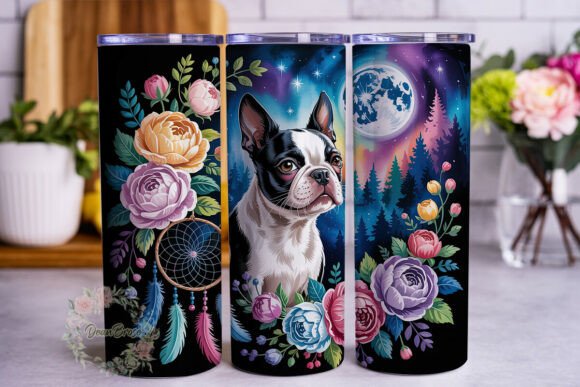
The Boston Terrier Dreamcatcher 20oz Wrap carries a distinct emotional weight. It feels warm, nostalgic, and slightly bohemian. Unlike a standard logo or a simple geometric pattern, this design tells a story immediately. The silhouette of the Boston Terrier provides a strong anchor, while the dreamcatcher elements add flow and intricate detail. For a crafter looking to create a personalized gift for a dog lover, this mood is exactly what resonates. It suggests care and attention to detail before the needle even touches the cloth.
However, the layout presents a challenge. The dimensions provided, 9.3″ x 8.2″, are substantial. In the world of embroidery projects, this size commands attention. It is not a small chest pocket accent; it is a statement piece. When I visualize this on a sweatshirt embroidery project, the scale feels right, allowing the dreamcatcher feathers and the dog's features to breathe. But if you plan to use this as a tote bag design on a smaller canvas, you might find yourself fighting the proportions. The visual personality here is bold, which means it demands a background that doesn't compete for attention.
Real-World Application: From Screen to Stitch
I recently simulated placing this design on a custom order for a boutique client. The request was for a line of holiday gifts featuring local pets. The Boston Terrier Dreamcatcher 20oz Wrap seemed perfect for a high-end pillow cover or a large kitchen towel. My thought process shifted quickly to the technical execution. How would the stitch density hold up? Would the intricate webbing of the dreamcatcher get lost in the weave of the fabric?
In a real-life scenario, this design shines on stable fabrics like cotton duck for tote bags or thick fleece for hoodies. The contrast between the black and white markings of the Boston Terrier and the potentially colorful threads of the dreamcatcher creates a dynamic look. However, if you attempt to put this on a stretchy fabric without proper stabilization, the distortion could ruin the symmetry of the hoop. I found myself thinking about the finished product value. A well-executed version of this design elevates a simple item into a collectible piece. Customers scanning an Etsy listing will stop because the image promises a unique, handcrafted feel rather than a mass-produced sticker.
Navigating Technical Challenges and Limitations
No design is without its pitfalls, and understanding where the Boston Terrier Dreamcatcher 20oz Wrap struggles is just as important as knowing where it succeeds. One of the primary concerns is the level of detail within the dreamcatcher web. If your machine has older needles or you are using lower-quality thread, those fine lines might break or merge, creating a muddy appearance. This is particularly risky on textured fabrics like waffle-knit towels or boucle sweaters, where the texture itself can interfere with the precision of the stitches.
Another critical area to consider is the hoop size. While the file dimensions are listed, the actual stitching area might require a larger hoop to accommodate the full 9.3-inch height comfortably. Attempting to fit this into a small hoop can lead to repositioning errors or incomplete stitching at the edges. Furthermore, if you are working with dark fabric, you must carefully select your underlay and top thread colors. A light-colored dreamcatcher web on a dark background requires high thread coverage, which increases the risk of puckering if the stabilizer isn't rigid enough.
I also had to think about curved surfaces. While this design is excellent for flat items like pillow covers or aprons, applying it to a cap or a rounded tumbler requires significant adaptation. The curvature of a hat crown can distort the straight lines of the terrier's body or the circular nature of the dreamcatcher. Unless you have advanced digitizing skills to adjust the pathing for curvature, I would advise sticking to flat surfaces for the best results.
Strategic Design Notes for Makers and Sellers
For those of you running a craft business or selling on platforms like Etsy, the decision to use this design involves more than just aesthetics. You need to verify the licensing terms explicitly mentioned in the download instructions. Does the purchase include rights for commercial use on finished goods? Many sellers assume they do, only to face legal hurdles later. Always confirm whether you can sell the physical items created with the digital embroidery file.
Before committing to a production run, I strongly recommend a test stitch on scrap fabric. This step is non-negotiable for professional results. Check the thread color contrast against your intended fabric. Sometimes a color looks vibrant on a monitor but appears dull in person due to lighting or fabric sheen. Inspect the small details, especially the tiny loops in the dreamcatcher web. Are they too dense? Will they snag easily during washing? These are questions that determine the longevity of your handmade product.
Additionally, consider the versatility of the design. Can it be scaled down for a baby embroidery project, perhaps on a bib or a small blanket? The current dimensions suggest it is better suited for adult-sized apparel or home decor, but a skilled designer might crop it effectively. When creating printable mockups for your shop, ensure the aspect ratio matches the final output. A distorted image in a preview can kill buyer engagement, no matter how beautiful the actual stitching is.
Final Verdict on Visual Appeal and Value
The Boston Terrier Dreamcatcher 20oz Wrap is a compelling asset for any designer looking to add a touch of whimsy and emotion to their portfolio. It bridges the gap between pet portraiture and spiritual art, offering a unique angle for holiday embroidery or personalized merchandise. Its strength lies in its narrative potential; it invites the viewer to imagine the story behind the dog and the dreamcatcher.
However, success depends entirely on execution. It requires a steady hand, appropriate equipment, and a deep understanding of machine embroidery design principles. If you treat it with the respect it deserves—testing thoroughly, choosing the right fabrics, and ensuring proper stabilization—it can become a flagship item for your small shop product line. It is not a "plug-and-play" solution for beginners, but for experienced makers willing to invest time in quality control, it offers a high return in terms of customer satisfaction and brand consistency. Ultimately, this design proves that when the right theme meets the right technique, the result is far more than just a stitched image; it is a cherished keepsake.