Salty Beach Vibes Gradient Tumbler Wrap Review
As a designer who spends half my life tweaking stitch densities and the other half worrying about whether a client will actually wear the shirt they paid for, I approach every new digital asset with a healthy dose of skepticism. We have all seen designs that look stunning in a high-resolution mockup but fall apart under the hoop or look muddy after three wash cycles. That is exactly why I decided to put Salty Beach Vibes Gradient Tumbler Wrap through its paces before recommending it to my network of small business owners and crafters.
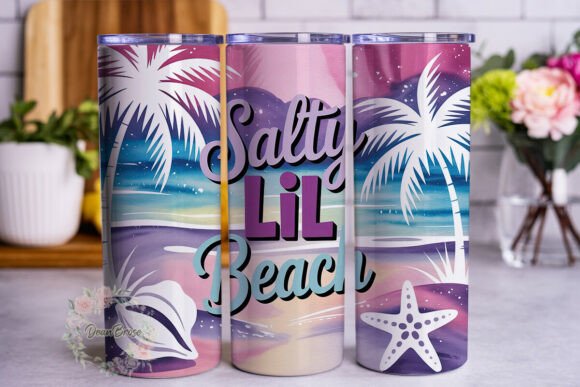
The product description highlights that this is a graphic asset provided as PNG files for both straight and tapered tumblers, sized at 9.3″ x 8.2″ with high-resolution 300 DPI clarity. While the file type suggests these are primarily intended for sublimation printing on drinkware, the visual language here—specifically the gradient flow and coastal theme—raises an interesting question for embroidery enthusiasts: could this work as a design motif for apparel or accessories? In this review, I am evaluating the aesthetic potential, practical application, and commercial viability of this design concept, treating it as a versatile design asset that can inspire custom apparel and handmade products beyond just drinkware.
First Impressions and Visual Mood
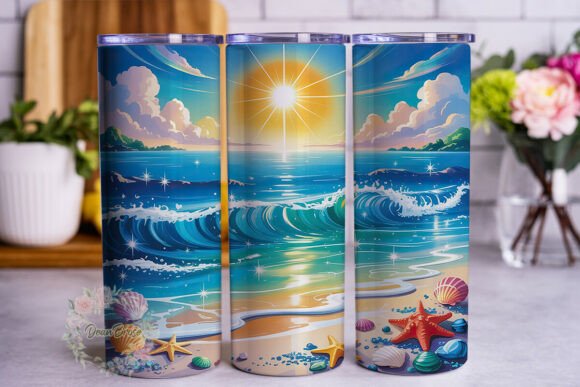
The moment you open the preview, the mood is immediately established. The title "Salty Beach Vibes" promises a relaxed, coastal aesthetic, and the design delivers. The gradient effect creates a smooth transition that mimics the horizon line where ocean meets sky, or perhaps the sandy dunes meeting the sea foam. For a designer, this is crucial because it provides a built-in color story. You do not need to spend hours mixing thread colors to get a cohesive look; the palette is already balanced.
From a layout perspective, the dimensions (9.3″ x 8.2″) suggest a substantial presence. On a tumbler, this wraps around the body, creating a continuous narrative. When translated mentally to other surfaces, such as a tote bag or a sweatshirt back panel, this size commands attention without overwhelming the garment. It feels like a statement piece rather than a subtle accent. This makes it ideal for custom apparel aimed at summer markets, beach weddings, or vacation-themed events.
The visual personality is clean and modern. There is no clutter, which is a relief. Many "beach" designs get bogged down with excessive shells, starfish, and anchors, resulting in a busy, dated look. This gradient approach relies on shape and color to convey the theme. In the world of embroidery project planning, simplicity often wins because it translates better to different stitch types. A clean gradient background allows for crisp satin stitch lettering or detailed applique design elements to pop against it.
Real-World Application Scenarios
Let’s talk about how this would perform in a real-life scenario. Imagine you are preparing inventory for a local craft fair or an Etsy seller listing for the upcoming holiday season. You want to create a cohesive brand identity. Using the visual style of Salty Beach Vibes Gradient Tumbler Wrap, you could develop a matching set. Picture a tote bag design featuring the same gradient arc, paired with a sweatshirt embroidery that uses the top portion of the gradient as a backdrop for a monogram.
This design also has strong potential for nursery decor or baby items. The soft transitions of a gradient are gentle on the eyes, making them suitable for baby embroidery projects like muslin swaddles or hooded towels. The "salty" aspect might seem harsh, but visually, it reads as fresh and airy. For a boutique branding strategy, consistency is key. If you use this gradient theme across your small shop product line—from kitchen towels to pillow covers—you create a recognizable visual signature that builds customer trust.
Furthermore, consider the giftability factor. Personalized gifts are a massive market. This design lends itself well to personalized gift concepts. For example, a holiday embroidery project could combine this coastal vibe with festive typography, creating a unique "winter escape" theme. Or, for wedding gifts, it could serve as a custom embroidered patch for the groom’s groomsman gifts, symbolizing their shared love for travel. The versatility of the graphic allows it to be adapted into various design assets depending on the occasion.
Practical Considerations for Embroidery Designers
While the visual appeal is high, we must address the technical realities of translating a flat graphic into a stitched reality. If you are considering using this gradient concept for machine embroidery design work, there are several critical factors to evaluate.
- Stitch Density and Fill Stitch: Gradients in embroidery are challenging. Unlike printing, you cannot easily fade ink. To achieve a gradient effect with thread, you typically rely on varying the density of fill stitch or using a specialized multi-color technique. Ensure your software supports the specific stitch patterns needed to mimic the smooth transition seen in the PNG. High stitch density can make fabric stiff, so test carefully.
- Hoop Size Constraints: At 9.3 inches wide, this design requires a medium-to-large hoop. Not all home machines support this. Before committing to a production run, confirm your hoop size capabilities. If you are working with smaller hoops, you may need to split the design, which can disrupt the seamless nature of the gradient.
- Fabric Texture and Stabilizer: The success of any large-scale design depends heavily on the foundation. A poor choice of stabilizer can cause the design to pucker, ruining the smooth lines of the gradient. Always test on scrap fabric that matches the weight and stretch of your final product. For stretchy fabric like jersey knits used in t-shirts, a cut-away stabilizer is usually non-negotiable to prevent distortion.
- Thread Color Contrast: The effectiveness of the design relies on contrast. If you are embroidering on dark fabric, ensure your thread choices provide enough visibility. Conversely, light fabrics require darker threads to define the shapes. Check your thread colors against the fabric texture to avoid a washed-out appearance.
Where to Use Carefully
There are certain contexts where this design might struggle. Avoid placing large gradient fills on textured fabrics like bouclé or heavy tweed, as the stitch definition will be lost. Similarly, be cautious with curved surfaces like caps or hats; while the tumbler wrap is designed for cylindrical objects, flattening it onto a curved hat crown may distort the gradient unless digitized specifically for that curve. Tiny details within the gradient should be scrutinized; if the gradient relies on subtle shifts that become indistinguishable when stitched, the design may look muddy from a distance.
Final Verdict on Commercial Viability
For commercial embroidery professionals and craft business owners, Salty Beach Vibes Gradient Tumbler Wrap offers a strong foundation for brand expansion. Even though the primary format is a graphic for tumblers, the aesthetic value extends far beyond drinkware. It speaks to a lifestyle that customers want to buy into.
By treating this as a versatile digital embroidery file inspiration source, you can create a range of handmade product lines that feel cohesive and professional. Whether you are producing printable mockups for clients or creating physical finished product inventory, the clean, modern vibe of this design helps elevate the perceived value of your goods. It moves away from cliché motifs and towards a more sophisticated, contemporary look.
Before you begin stitching, remember to check licensing terms if you plan to sell finished items. Confirm whether the purchase includes commercial rights for the underlying graphic or if it is limited to personal use. Additionally, always run a black-and-white mockup test to ensure the design holds up structurally without the benefit of color. With proper testing and thoughtful application, this design has the potential to be a standout addition to your creative arsenal, appealing to everyone from casual hobbyists to serious apparel decorators.