Independent Crafter Poster: A Designer's Real-World Review
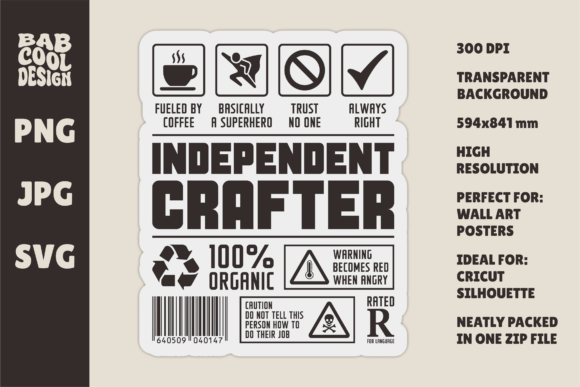
I have stitched thousands of designs over the years, ranging from delicate floral monograms to complex team logos. When I first saw Independent Crafter Poster, my initial reaction was a mix of amusement and professional curiosity. It is not your typical embroidery file. Instead of a standard floral border or a generic "Made with Love" script, this piece arrives dressed as a "Handling Information" label, turning any profession into a literal product.
The concept is brilliant for anyone looking to add personality to their Crafts and Graphics inventory. But as an experienced designer, I know that a clever idea does not always translate perfectly to thread. Before you download this embroidery file and start stitching on your next batch of custom apparel, let's break down how this design performs in real-world scenarios, where it shines, and where you need to exercise caution.
The First Impression: Packaging Humans as Products
The visual personality of Independent Crafter Poster is immediate and bold. By mimicking the aesthetic of real package labels, the design taps into a modern, slightly ironic trend that resonates well with creative entrepreneurs and hobbyists alike. It feels like a nod to the hustle culture but wrapped in a humorous, self-deprecating package.
From a layout perspective, the design creates a mood of organized chaos. The typography likely varies between bold headers and smaller, data-heavy details, much like a shipping manifest. This creates a dynamic visual rhythm that can work beautifully on various surfaces. Unlike a simple text-only design, the graphical elements suggest depth and texture even before the needle touches the fabric. It promises a finished product that looks intentional, professional, and ready for a boutique shelf.
When I imagine this on a tote bag design or a kitchen towel, it instantly elevates the item from a basic utility to a statement piece. It tells a story about the wearer without them having to say a word. For an Etsy seller or a small shop owner, this kind of unique asset is gold because it stands out in a crowded marketplace.
Real-Life Application: The Custom Sweatshirt Scenario
Let me take you through a specific scenario I recently considered for a client project. A local bakery wanted to create a uniform line for their staff, specifically targeting the head bakers who often joke about being "fragile goods." They needed something that felt personal but wasn't too cheesy.
I pulled up Independent Crafter Poster as a candidate for a sweatshirt embroidery project. My thought process immediately shifted to the technical execution. Would the "specs" look legible on a heavy cotton fleece? How would the stitch density handle the curved surface of a chest area?
In this context, the design works exceptionally well. The label format allows for a compact yet information-rich placement on the left chest or back of a sweatshirt. The humor lands perfectly when paired with high-quality thread colors. Imagine a dark navy hoodie with the label stitched in bright white and yellow threads; it mimics the warning tape look of real packaging while remaining readable. It transforms a standard work shirt into a conversation starter at the craft fair or the coffee shop.
Similarly, this design is a natural fit for personalized gifts. Picture a baby shower gift where the newborn is labeled as a "Fragile Item - Handle with Care," or a graduation present for a new teacher. The versatility of the theme means it can be adapted for almost any profession, making it a highly valuable addition to a designer's portfolio of design assets.
Technical Performance and Fabric Considerations
While the concept is strong, every machine embroidery design has its limitations. The success of Independent Crafter Poster relies heavily on how well the stitches interact with different materials. Here is what you need to know before committing to a production run.
- Hoop Size and Detail: If the design includes tiny lettering or intricate corner details, you must ensure your hoop size accommodates the full dimensions without distortion. Small hoops can sometimes compress fine details, making the "specs" unreadable. Always check the digitization specs provided by the creator.
- Fabric Texture: This design thrives on smooth, stable fabrics. It will look crisp on canvas tote bags, linen aprons, or tightly woven cotton tees. However, if you are working with highly textured fabrics like chunky knits or bouclé, the satin stitch and fill stitch areas might get lost in the weave. The contrast required for the label look could be compromised.
- Stretch and Stability: For custom apparel like t-shirts or caps, stretchy fabrics require extra attention. You cannot simply hoop the fabric and start stitching. Proper stabilizer is non-negotiable here. Without a cut-away stabilizer underneath, the tension of the stitches could cause the garment to pucker, ruining the "label" illusion.
- Dense Stitch Areas: Designs that mimic printed labels often rely on high stitch counts to achieve sharp edges. If the stitch density is too high, the fabric may become stiff, which is undesirable for items like baby clothes or pillow covers. Conversely, if it is too low, the design may lack definition. Test the density on scrap fabric first.
Where to Use (and Where to Pause)
To maximize the value of this embroidery project, you need to know where it fits best and where it might fail. For commercial embroidery projects intended for resale, Independent Crafter Poster is excellent for items that do not undergo frequent washing or heavy abrasion. Think of decorative pillows, wall hangings, or holiday-themed patches.
However, there are areas where you should proceed with caution. Dark fabric requires careful thread color selection to ensure the "handling info" pops. If the background is black and the text is dark gray, the effect is lost. Similarly, on curved surfaces like caps, the rectangular nature of a label design can sometimes look awkward if the curvature is severe. In these cases, you might need to adjust the digitization or choose a different placement.
Avoid using this design on thin, sheer fabrics unless you are doing a double-layer application. The weight of the embroidery could tear the material. Also, be mindful of the finished product feel. If the goal is a soft, wearable garment, ensure the backing stabilizer is removed or trimmed carefully so the back of the embroidery doesn't irritate the skin.
Designer Notes for Professional Results
Before you hit the "start" button on your machine, I recommend following a few practical steps to ensure your handmade product meets professional standards.
- Test on Scrap: Never use your final fabric for the first run. Stitch the design on a scrap of the same material to check for puckering, thread breaks, or misalignment.
- Check Contrast: Hold your mockup up to the light. Does the text read clearly? If you are using a digital printable mockup to sell the item, ensure the image accurately reflects the thread colors and texture.
- Review Licensing: If you plan to sell finished items made with this design, confirm the license terms. Some files allow commercial use, while others are for personal projects only. Ignoring this can lead to legal issues for your craft business.
- Inspect Small Details: Zoom in on the design preview. Are the corners sharp? Is the "warning" text legible? Sometimes, what looks good on a screen shrinks significantly when stitched.
- Color Matching: Select thread colors that complement the label aesthetic. Standard black and white might feel too stark; consider muted tones or industrial colors to enhance the "product" vibe.
Independent Crafter Poster is more than just a graphic; it is a tool for storytelling. When executed correctly, it adds a layer of wit and professionalism to your work. Whether you are creating a unique gift for a friend or building a line of merchandise for your online store, this design offers a fresh take on the classic embroidered patch. Just remember, the magic lies in the execution. Take your time with the setup, respect the fabric, and let the design do the talking.
For those looking to expand their embroidery project repertoire, this file is a smart investment. It bridges the gap between digital graphics and tactile art, offering a versatile option for modern makers. Just keep your eyes on the details, test thoroughly, and you will find that this "product" handles beautifully in the hands of a skilled embroiderer.